





blog
Advantages of direct heat tunnel ovens

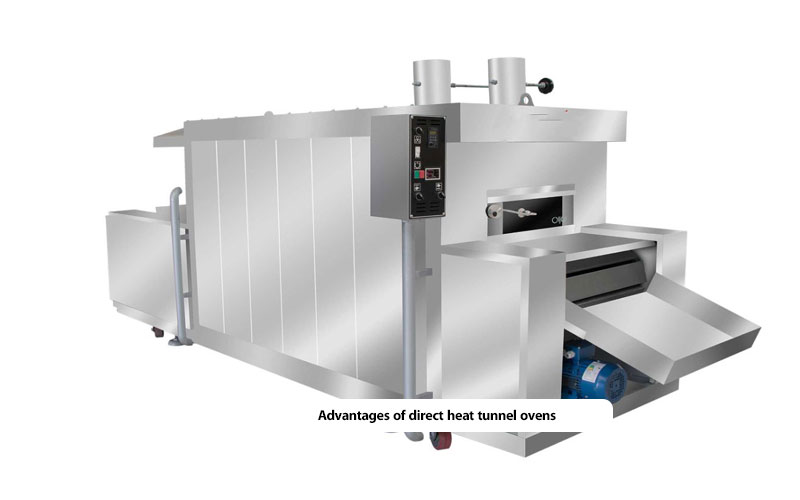
In the baking industries of food products such as biscuits, crackers, bread, and cakes, tunnel ovens are the heart of the production line. Among these, the direct heat tunnel oven is one of the most widely used types of this equipment, appreciated for its high thermal efficiency and lower initial cost. If you are looking for the price of a direct heat tunnel oven or want to learn about the advantages and disadvantages of a gas tunnel oven, this article covers everything you need to know.
What is a Direct Heat Tunnel Oven and How Does It Work?
A direct heat tunnel oven (Direct Fired Tunnel Oven) is a continuous industrial oven in which the heat source (usually gas burners or electric heating elements) is located directly inside the baking chamber, transferring heat to the product without any intermediary. In this system, products (e.g., shaped biscuit dough pieces) pass through the tunnel on a stainless steel wire-mesh conveyor belt and are simultaneously exposed to direct heat from the burners/elements as well as radiant heat from the hot tunnel walls.
In many models, combustion products (hot gases) are passed directly over the product surface to enhance heat transfer rates. This method enables rapid baking with high energy efficiency and is ideal for products requiring uniform and fast baking. The gas direct heat tunnel oven is the most common type, operating on natural gas or LPG.
Main Components of a Direct Heat Tunnel Oven
A direct heat tunnel oven consists of several key sections:
- Baking Chamber (Tunnel): An insulated enclosure through which the product passes. Interior walls are typically made of stainless steel or coated steel.
- Burners or Heating Elements: In gas models, linear or ribbon burners are placed above and below the conveyor belt. In electric models, rod-shaped elements provide the heat.
- Air Recirculation System (Fans): Fans that circulate hot air to ensure even heat distribution. In many modern ovens, fans are controlled in separate zones.
- Conveyor Belt: A stainless steel mesh belt that transports the product at an adjustable speed from the tunnel entrance to the exit.
- Exhaust System: For removing combustion products and water vapor generated during baking.
- Control Panel: Equipped with PLC and HMI for setting temperature, belt speed, and logging baking parameters.
Advantages of a Direct Heat Tunnel Oven
Using a direct heat tunnel oven offers significant benefits compared to other types of industrial ovens (especially indirect ovens):
- High Thermal Efficiency: Due to direct contact of the flame and hot gases with the product, heat transfers much faster, meaning lower fuel consumption and quicker baking.
- Lower Initial Cost: No need for complex heat exchangers, simpler construction, and easier installation reduce the overall oven cost. Many buyers seek an affordable direct tunnel oven price.
- Increased Production Speed: Fast baking allows for higher production line throughput.
- Suitable for Hard and Semi-Sweet Biscuits: Direct gas ovens deliver excellent performance for baking hard biscuits like Marie, Petit Beurre, and low-fat crackers.
- Easier Maintenance: Fewer moving parts and the absence of a heat exchanger reduce breakdowns.
Drawbacks and Challenges of Direct Heat Tunnel Ovens
Despite all the benefits, direct heat tunnel ovens have some limitations to consider before purchase:
- Potential Product Contamination with Combustion Gases: Hot gases contain carbon dioxide, and in cases of incomplete combustion, carbon monoxide and particulate matter. Although modern ovens with proper design and full ventilation minimize this risk, for highly sensitive products (such as butter biscuits or products with delicate flavors), slight taste changes may occur.
- More Difficult Heat Distribution Compared to Indirect Ovens: Precise temperature control across the entire belt surface can be challenging, especially if the product has variable thickness or is sensitive to temperature fluctuations.
- Safety Hazards: Working with natural gas requires adherence to safety principles, and there is a risk of explosion or gas leak in case of poor maintenance.
- Need for Strong Ventilation: Exhausting hot gases and odors is essential, which can increase facility energy consumption.
Applications of Direct Heat Tunnel Ovens in the Food Industry
Gas direct heat tunnel ovens are widely used in many food industries:
- Hard Biscuit and Cracker Production: Most dry biscuit and cracker production lines use direct gas ovens.
- Industrial and Semi-Voluminous Bread Production: In production lines for toast bread, baguettes, and hamburger buns.
- Cakes and Puffed Pastries: Usually equipped with finer control in these cases.
- Puffed Corn and Snacks: Rapid baking and high heat are essential for puffed corn and extruded snacks.
Key Points When Buying a Direct Heat Tunnel Oven
If you intend to buy a direct heat tunnel oven, paying attention to the following is mandatory:
- Capacity and Dimensions: The tunnel length, belt width, and number of tiers must match your daily production volume. Common ovens range in length from 12 to 60 meters and in width from 600 to 1500 mm.
- Fuel Type: Natural gas, diesel, or electric (heating elements). In many regions, gas is the most economical option.
- Zone-Based Temperature Control System: The oven should be equipped with several independent heating zones to create the desired temperature profile.
- Construction and Insulation Quality: High-quality rock wool insulation and a double-wall body prevent heat loss.
- Safety System: Gas leak detection sensors, automatic shut-off valves, and effective ventilation are essential.
- After-Sales Service: The supplier must guarantee installation, commissioning, training, and supplying spare parts.
Direct Heat Tunnel Oven Price and Influencing Factors
The direct heat tunnel oven price depends on several factors:
- Dimensions and Capacity: The length and width of the oven directly affect the price. Longer and wider ovens are naturally more expensive.
- Inner Body and Belt Material: Stainless steel 304 or 316 increases cost.
- Brand and Country of Origin: Domestic ovens are typically cheaper than imported ones (from China, Turkey, Europe).
- Auxiliary Equipment: Air circulation fans, PLC system, remote temperature and speed monitoring.
- Number of Burners or Elements and Their Brand.
For a medium-capacity biscuit production line, the price of a direct gas tunnel oven can range from several hundred million to over 2 billion Iranian Tomans. It is recommended to obtain quotations from several reputable companies and compare technical specifications carefully before purchasing.
Maintenance and Safety for Direct Heat Tunnel Ovens
To ensure safe operation and a long service life, follow these guidelines:
- Periodically inspect burners and flame spreaders to ensure complete combustion.
- Clean the conveyor belt and tunnel floor weekly from burnt crumbs.
- Calibrate temperature and gas sensors every six months.
- Inspect gas pipes and connections for leaks.
- Ensure the exhaust system for hot gases functions correctly.
Direct vs. Indirect Tunnel Oven: Which is More Suitable?
Ultimately, the choice between a direct tunnel oven and an indirect tunnel oven (Convection Oven) depends on your product type and priorities. If your product falls into the category of hard biscuits, crackers, or industrial breads and is not highly flavor-sensitive, a direct oven is a cost-effective and efficient option. For more delicate products like butter biscuits, sponge cakes, or items requiring a perfectly clean baking environment, an indirect oven is preferred.
Conclusion:
The direct heat tunnel oven is one of the key pieces of equipment in industrial baked product lines. Its simplicity, high efficiency, and affordable price have kept this technology as the first choice for many manufacturers. By fully understanding the advantages and disadvantages of direct tunnel ovens and considering the buying and maintenance tips, you can make a smart investment in your production line. Remember that consulting with food industry specialists and reputable manufacturers guarantees a successful purchase.