





blog
Ideal Tunnel Oven Length for a Factory

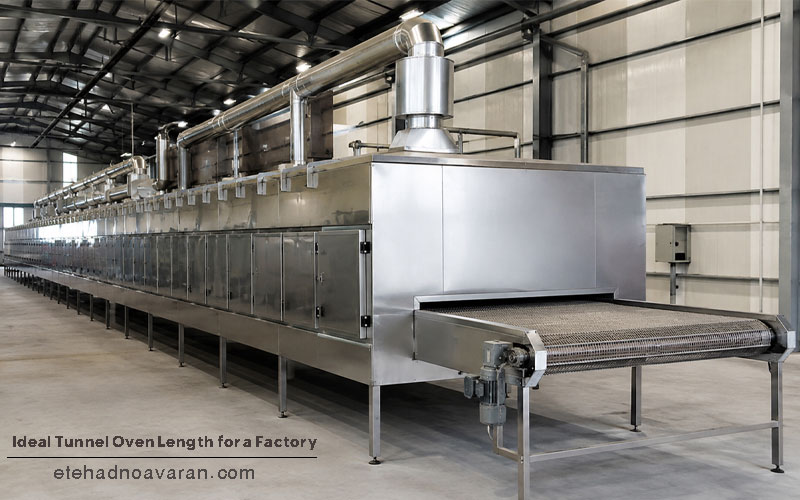
Selecting the ideal tunnel oven length is one of the most important decisions when designing a production line for biscuits, cookies, crackers, cakes, and other baked products. Many manufacturers focus only on the purchase price or the number of burners, while the oven length directly affects baking quality, production efficiency, energy consumption, and the overall profitability of the factory.
Whether you are planning to establish a new production line or expand an existing factory, understanding how to choose the correct tunnel oven length will help you achieve consistent product quality and maximize production capacity. This comprehensive guide explains the key factors that determine the ideal tunnel oven length for industrial food manufacturing.
What Is a Tunnel Oven and Why Does Its Length Matter?
A tunnel oven is a continuous industrial baking system in which products travel through different heating zones on a conveyor belt. During this process, the product is baked gradually under controlled temperature conditions. The length of the tunnel oven determines how long the product remains inside the baking chamber. This residence time plays a critical role in ensuring proper baking, moisture removal, texture development, and color consistency.
A properly designed tunnel oven length directly influences:
- Baking quality
- Production capacity
- Conveyor speed
- Energy efficiency
- Product color
- Final moisture content
- Production stability
How Is the Ideal Tunnel Oven Length Determined?
The ideal tunnel oven length is not selected based solely on available factory space. Engineers evaluate several technical parameters before recommending the appropriate design.
The most important factors include:
- Production capacity
- Product type
- Required baking time
- Conveyor belt speed
- Oven width
- Number of burners
- Heating system
- Number of heating zones
- Factory layout
- Future production expansion
Tunnel Oven Length Based on Production Capacity
Production capacity is one of the primary factors influencing oven length. Typical industrial recommendations include:
| Production Capacity | Approximate Oven Length |
|---|---|
| 200–300 kg/hour | 12–18 meters |
| 300–600 kg/hour | 18–25 meters |
| 600–1,200 kg/hour | 25–40 meters |
| Above 1,200 kg/hour | 40–80 meters |
Actual dimensions may vary depending on the product characteristics and the oven technology used.
Best Tunnel Oven Length for Biscuit Production
Industrial biscuit production generally requires tunnel ovens ranging from 20 to 50 meters in length. Biscuits require sufficient baking time to develop:
- Uniform golden color
- Crispy texture
- Proper internal structure
- Controlled moisture content
If the oven is too short, several quality issues may occur:
- Undercooked center
- Burnt surface
- Uneven color
- Reduced product quality
Ideal Tunnel Oven Length for Cracker Manufacturing
Crackers typically require longer baking times than standard biscuits because moisture must be removed gradually while maintaining product texture. For this reason, cracker production lines often use tunnel ovens between 30 and 60 meters long with multiple heating zones.
Choosing the Right Tunnel Oven Length for Cake Production
Cake production differs significantly from biscuit manufacturing. Because cakes are thicker and contain higher moisture levels, they require longer baking times and carefully controlled heating profiles. Longer tunnel ovens with multiple heating zones ensure even baking from the center to the surface.
The Relationship Between Conveyor Speed and Tunnel Oven Length
Conveyor speed and oven length must always be balanced. If production speed increases while the oven length remains unchanged:
- Baking time decreases
- Product quality deteriorates
- Products may leave the oven underbaked
A properly designed tunnel oven allows manufacturers to increase production speed while maintaining consistent product quality.
Why Heating Zones Are Important
Modern tunnel ovens are divided into multiple temperature-controlled zones. Each zone performs a specific function:
- Preheating
- Initial baking
- Product expansion
- Moisture removal
- Color development
- Final stabilization
Multiple heating zones provide better process control and improve overall baking consistency.
Is a Longer Tunnel Oven Always Better?
Not necessarily. Although longer ovens provide greater baking flexibility, selecting an oversized oven for a small production facility may result in:
- Higher investment costs
- Increased maintenance expenses
- Larger installation space requirements
- Reduced operational efficiency
- Unnecessary energy consumption
The oven length should always match the actual production requirements.
Benefits of Choosing the Correct Tunnel Oven Length
A properly designed tunnel oven offers numerous advantages, including:
- Improved baking quality
- Lower production waste
- Higher energy efficiency
- Uniform product color
- Greater production capacity
- Reduced downtime
- Longer equipment lifespan
- Lower operating costs
Does Tunnel Oven Length Affect Energy Consumption?
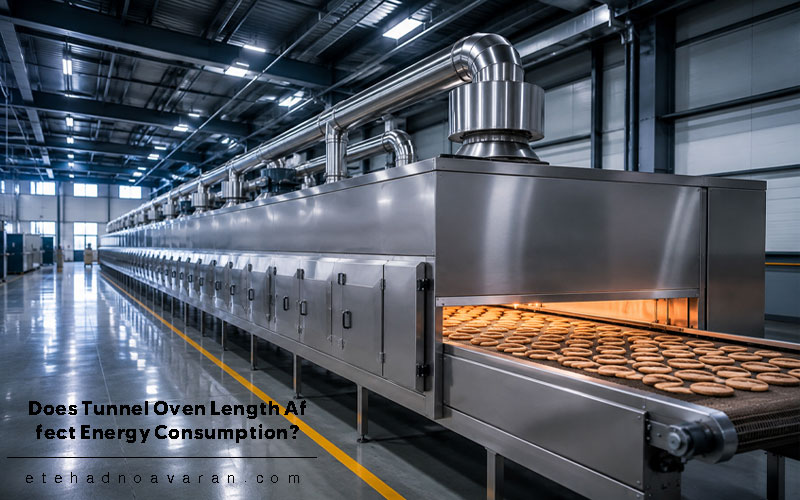
Does Tunnel Oven Length Affect Energy Consumption?
Many factory owners assume that a longer oven always consumes more energy. In reality, energy consumption depends on several engineering factors such as:
- Thermal insulation
- Burner efficiency
- Heating system design
- Temperature control system
- Heat recovery technology
- Overall oven efficiency
A well-designed long tunnel oven can often consume less energy than a poorly designed shorter oven.
What Should You Consider Before Buying a Tunnel Oven?
Before investing in a tunnel oven, manufacturers should evaluate:
- Current production capacity
- Future expansion plans
- Product portfolio
- Factory dimensions
- Available fuel source
- Temperature control system
- Number of heating zones
- Insulation quality
- Construction materials
- After-sales service
- Custom engineering capabilities
How Large Manufacturing Plants Select Tunnel Oven Length
Large-scale food manufacturers usually forecast production requirements for the next five to ten years before selecting a tunnel oven. This approach allows engineers to optimize:
- Oven length
- Conveyor width
- Heating capacity
- Burner configuration
- Control systems
Planning for future expansion minimizes the need for expensive equipment replacement later.
Common Mistakes When Choosing Tunnel Oven Length
Some of the most common purchasing mistakes include:
- Choosing based only on price
- Ignoring actual production capacity
- Underestimating future expansion
- Overlooking product characteristics
- Installing an oven that is too short
- Purchasing an oversized oven without operational need
How to Choose the Best Tunnel Oven Length
Selecting the right tunnel oven involves several engineering steps:
- Calculate hourly production capacity.
- Identify the product type.
- Determine required baking time.
- Calculate conveyor speed.
- Design the appropriate heating zones.
- Select the most suitable heating system.
- Evaluate factory installation space.
- Consult an experienced industrial oven manufacturer.
Why Custom Tunnel Oven Design Matters
Every food manufacturing facility has unique production requirements. Factors such as product formulation, production volume, available fuel, factory layout, and future expansion plans make custom engineering essential. A customized tunnel oven allows manufacturers to optimize oven length, width, heating zones, temperature control, and overall production efficiency while reducing operating costs.
Conclusion
Choosing the ideal tunnel oven length is a critical engineering decision for every food manufacturing facility. The correct oven length should be determined based on production capacity, product type, baking time, conveyor speed, heating zone configuration, and long-term expansion plans. A properly engineered tunnel oven improves product quality, reduces energy consumption, minimizes production waste, and increases manufacturing efficiency. Working with an experienced industrial food machinery manufacturer ensures that your tunnel oven is designed to meet your current needs while supporting future growth.
Frequently Asked Questions
What is the standard length of a tunnel oven?
Tunnel ovens typically range from 12 to 80 meters depending on production capacity and product type.
Does a longer tunnel oven improve baking quality?
Yes, provided the oven length is properly matched with production speed and baking time. Simply increasing the length without proper engineering may not improve product quality.
What is the recommended tunnel oven length for biscuit production?
Most industrial biscuit production lines use tunnel ovens between 20 and 50 meters long, depending on production capacity and product specifications.
Can a tunnel oven be extended later?
Some modular tunnel oven designs allow future expansion by adding additional baking sections. This possibility should be considered during the initial engineering stage.
What is the most important factor in determining tunnel oven length?
The required baking time, conveyor speed, and desired production capacity are the three primary factors used to determine the appropriate tunnel oven length.