40-Meter Biscuit Production Line: Complete Overview of Equipment and Processing Stages
Have you ever wondered what machines are included in a 40-meter industrial biscuit production line and how they transform simple dough into crispy, flavorful biscuits? In this comprehensive guide, we introduce all the equipment used throughout the 40-meter production process, from raw material mixing to final packaging. If you are planning to establish or optimize a biscuit manufacturing facility, this article covers everything you need to know.
Why Is a 40-Meter Biscuit Production Line Important?
A complete biscuit production line typically ranges from 30 to 60 meters in length. However, the 40-meter configuration is one of the most common and cost-effective solutions for producing soft biscuits, crispy biscuits, crackers, and wafer-type products at medium to high production capacities.
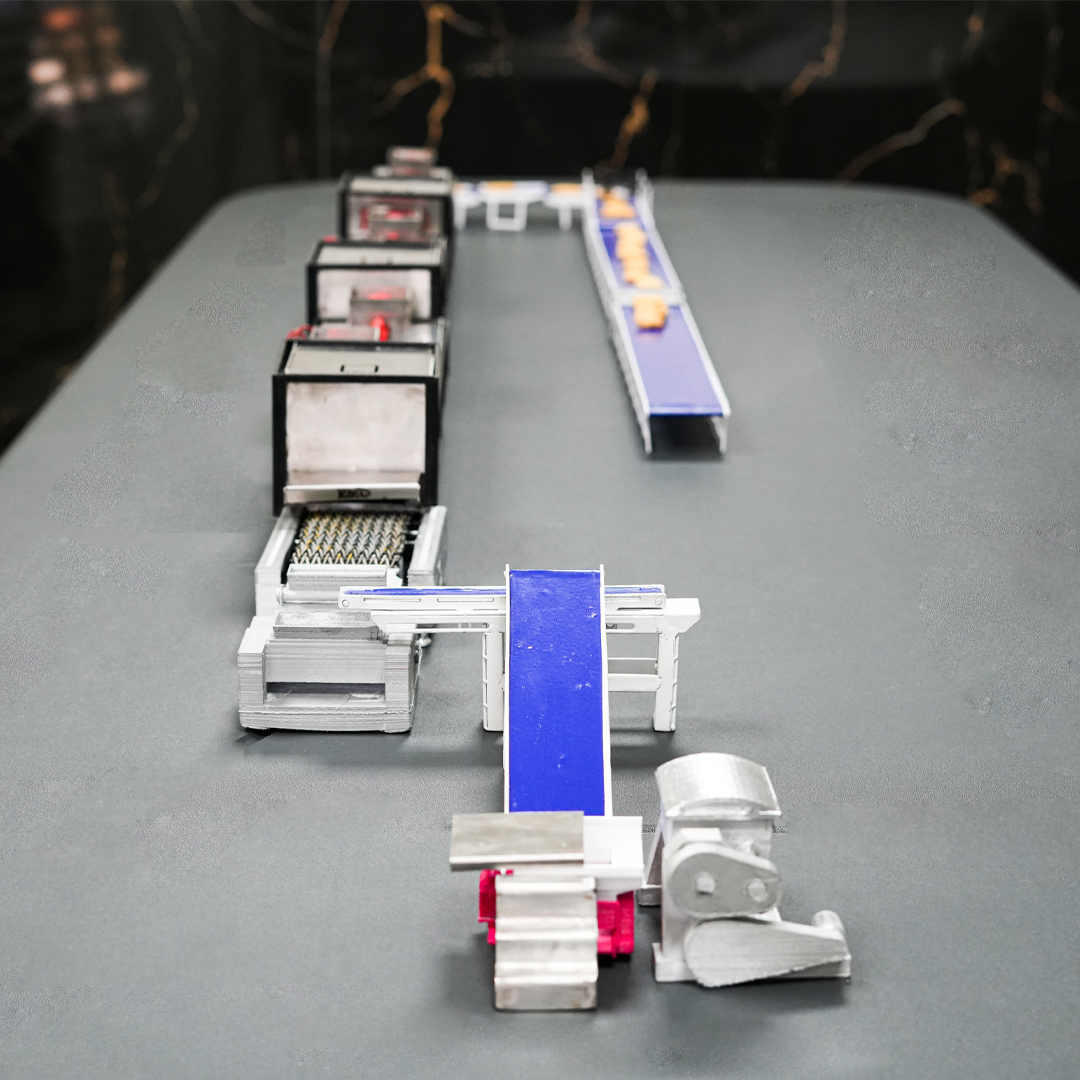
This setup generally includes space for dough mixing, forming, baking in a tunnel oven, cooling, and stacking/packaging. The baking tunnel alone may occupy 20–25 meters of the line, while the remaining length is allocated to preparation and finishing operations.
Equipment Installed Along the 40-Meter Biscuit Production Line
1. Raw Material Weighing and Mixing System (Meter 0–3)
- Flour and sugar storage silos for bulk ingredient storage.
- Vibrating flour sifter to remove impurities and aerate the flour.
- Automatic weighing systems for precise measurement of flour, sugar, oil, water, and additives.
- Dough mixer (double-arm or vertical type) for producing a homogeneous dough mixture.
2. Dough Elevator and Feeding Hopper (Meter 3–5)
- Screw or belt conveyor elevator to transfer prepared dough from the mixer to the forming section.
- Feeding hopper equipped with automatic level control to ensure a consistent dough supply.
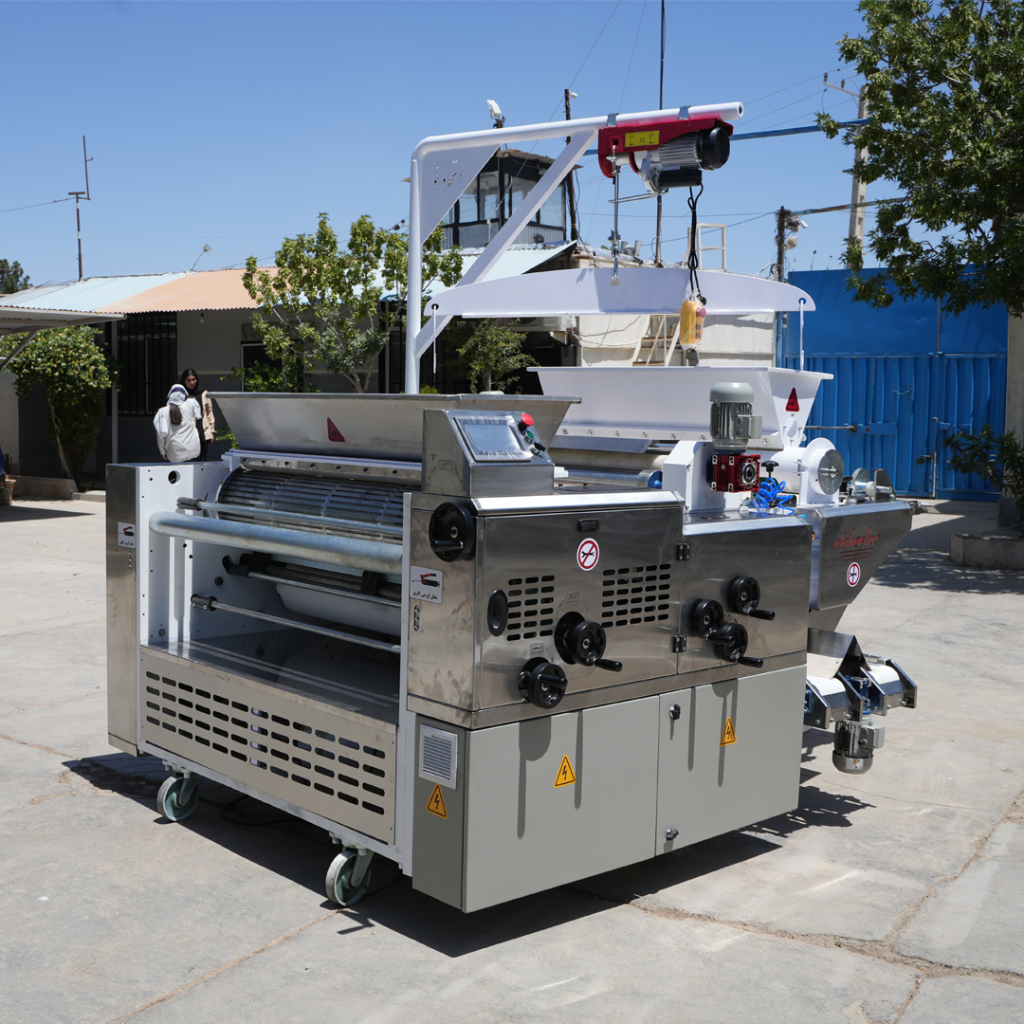
3. Forming and Shaping Section (Meter 5–12)
Depending on the biscuit type, one of the following systems is used:
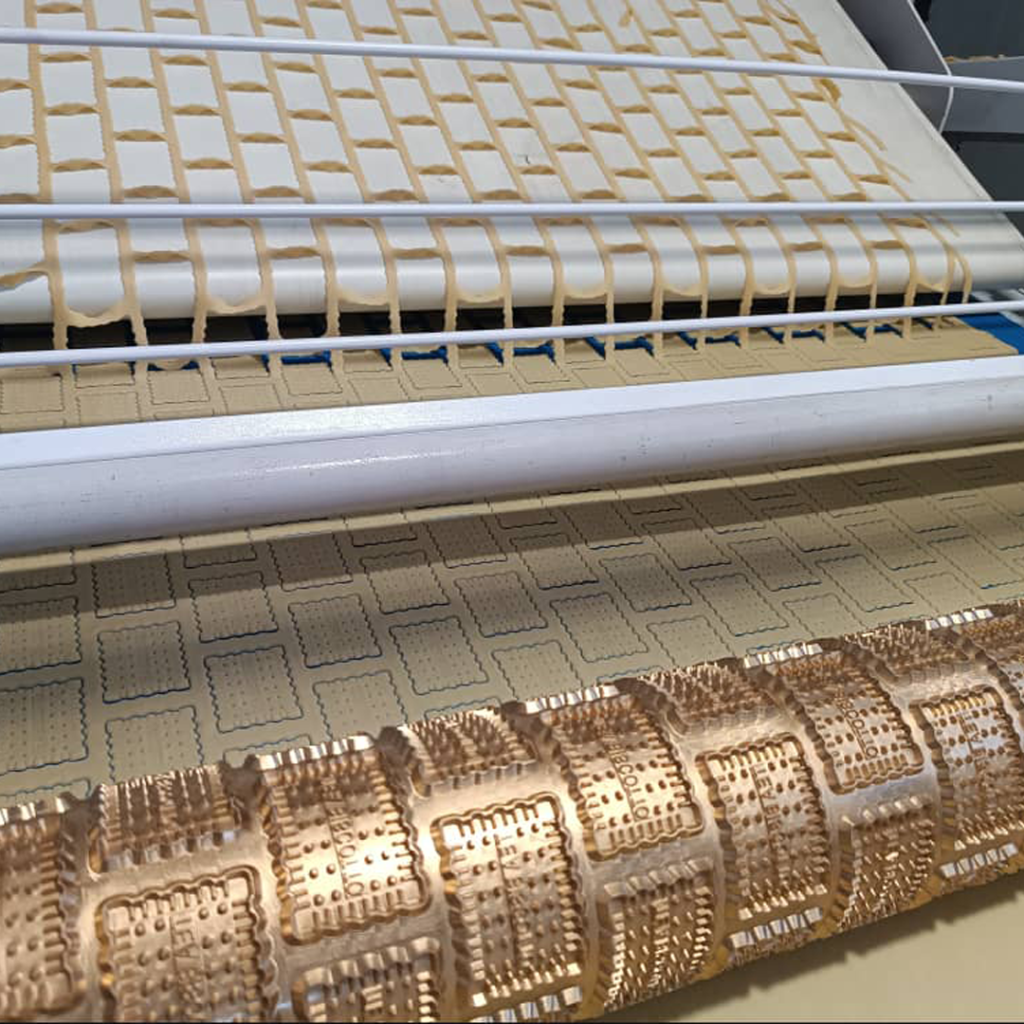
- Sheeter with multiple roller stages to reduce dough thickness uniformly (typically 1–5 mm).
- Laminator for layered dough products and puff-style biscuits.
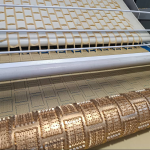
- Rotary cutter for shaping and cutting dough into biscuit forms while recycling excess dough.
- Rotary moulder for harder dough formulations, directly molding dough into desired shapes.
A mesh conveyor belt, typically 4–5 meters long, transports the shaped dough pieces toward the baking tunnel. Some production lines also include a sugar or salt sprinkling unit.
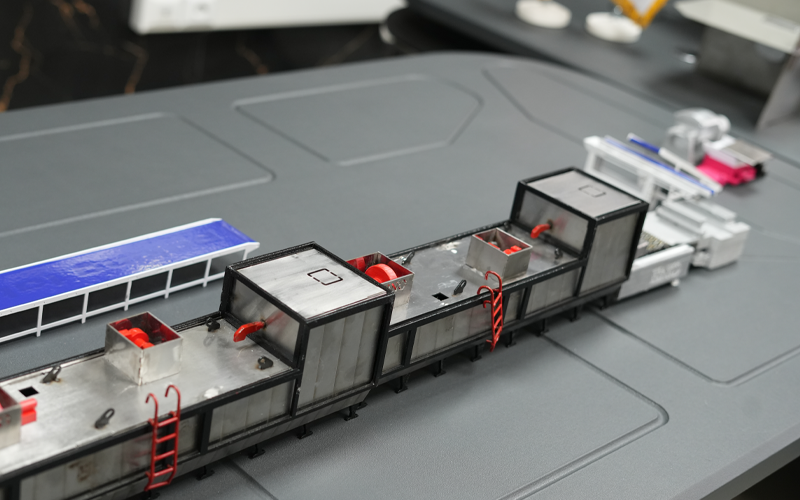
4. Baking Tunnel Oven (Meter 12–34)
The tunnel oven is the largest section of the production line, occupying approximately 20–25 meters.
Its main components include:
- Multi-zone baking chambers (3–5 zones) with independent temperature control ranging from 180°C to 240°C.
- Stainless steel wire mesh conveyor belt.
- Hot air circulation (convection) system for uniform baking.
- Exhaust and humidity control system for steam removal.
- Final cooling section at the oven exit for gradual temperature reduction.
5. Cooling Conveyor (Meter 34–38)
After baking, biscuits leave the oven at temperatures of approximately 90–100°C.
A cooling conveyor, usually 4–6 meters long, lowers the product temperature to around 35°C, suitable for packaging. This section often includes:
- Mesh cooling conveyors.
- Upper and lower cooling fans.
- Optical inspection systems or color sensors for quality control and defect detection.
6. End-of-Line Equipment (Meter 38–40)
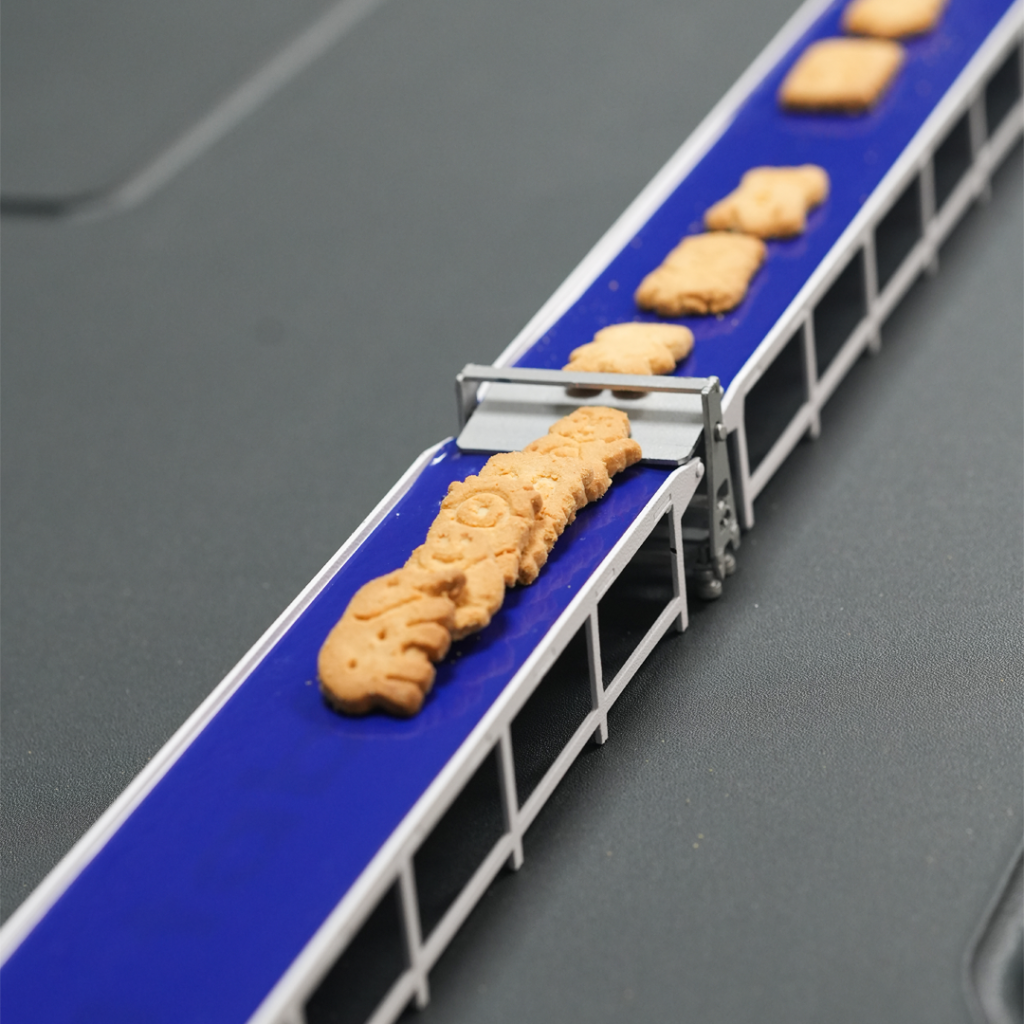
The final two meters of the line typically include:
- Stacker machine for arranging biscuits into organized rows or stacks.
- Flow-pack or shrink-wrapping machine for primary packaging.
- Collection table or transfer conveyor for secondary packaging and carton loading.
Advantages of an Integrated 40-Meter Biscuit Production Line
- High productivity through continuous production flow.
- Reduced labor requirements due to automation.
- Consistent product quality through precise control of temperature, humidity, and dough thickness.
- Efficient space utilization suitable for medium-sized factories while supporting several tons of daily production capacity.
Conclusion
A 40-meter biscuit production line is an intelligent solution for manufacturers seeking the optimal balance between investment cost, production efficiency, and factory space. Equipped with essential machines such as dough mixers, sheeters, rotary cutters, a 25-meter tunnel oven, cooling conveyors, and packaging systems, it provides a complete production path from raw materials to finished products.
With such a production line, manufacturers can produce a wide range of biscuits, crackers, and baked snacks while maintaining superior quality and operational efficiency.
For professional consultation regarding the installation of a 40-meter biscuit production line or to receive equipment pricing information, contact our experts today.





Reviews
Clear filtersThere are no reviews yet.