In a modern biscuit production line, the speed of baking and product exiting the oven is very high. But one of the biggest challenges for factories is to transform the mass of biscuits spread on the conveyor belt into regular rows for entering the packaging machine. This is where the biscuit production line’s row aligner (Biscuit Row Aligner) comes into play as a strategic intermediary link.
What is a biscuit row aligner or rower?
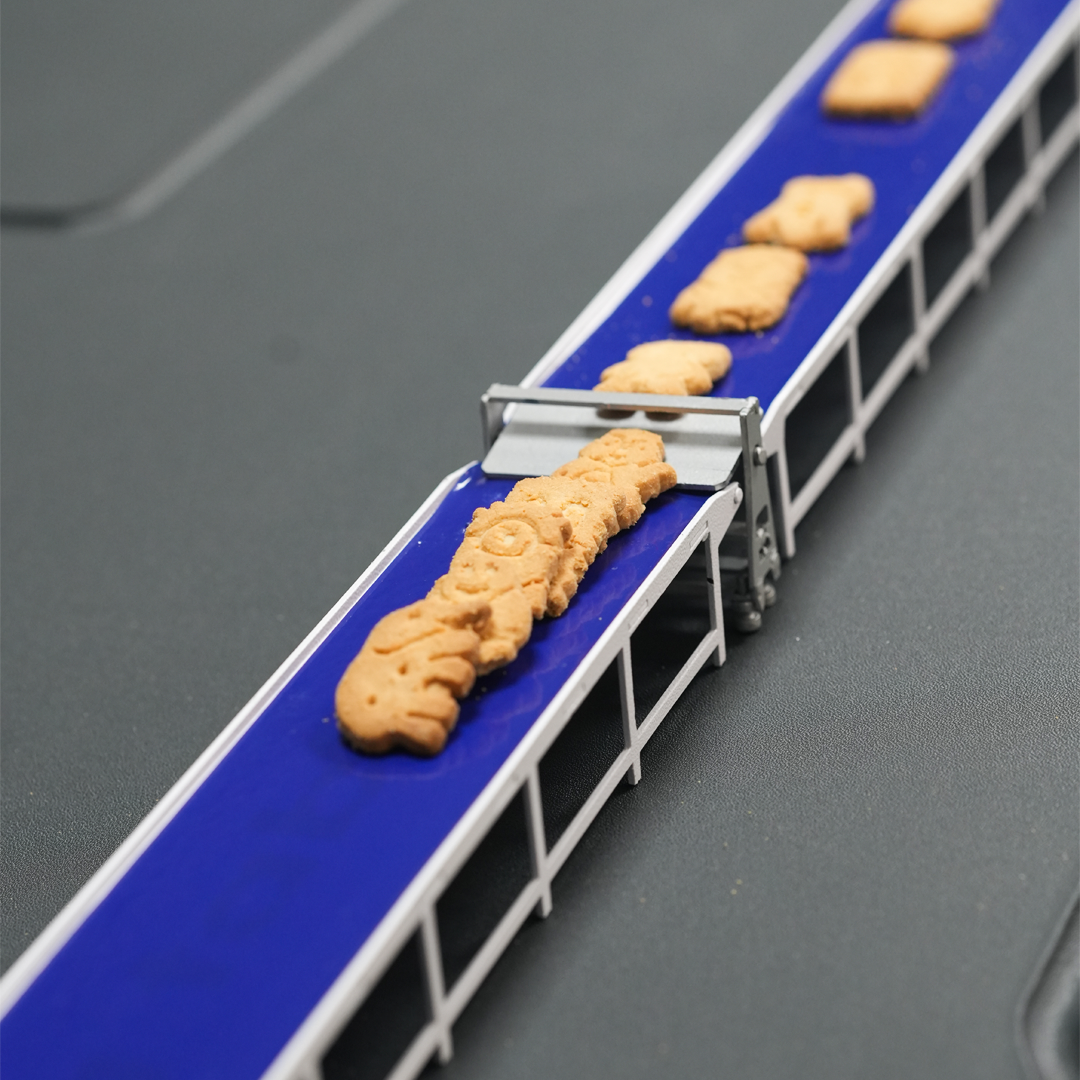
The row aligner, known in the market by names such as “rower”, “arranger” or part of the “Stacker” system, is responsible for identifying biscuits that come irregularly from the cooling belt and arranging them in parallel and precise lines (Ranks). This arrangement is vital for the correct feeding of the Flow Pack packaging machines or sandwiching machines.
Why is it necessary to use a stacker in the production line?
Eliminating human labor and replacing it with an intelligent stacker system has several advantages, including:
Unprecedented increase in packaging speed: Automatic packaging machines require regular input to operate at maximum speed.
Significant reduction in waste: When biscuits are irregular, the likelihood of them getting stuck in the opening of the packaging machine and being crushed is very high.
Full compliance with hygiene protocols: By eliminating hand contact during the arrangement stage, secondary contamination of the product is reduced to zero.
Reduction in ongoing costs: The cost of purchasing a stacker is recovered in less than a year from the elimination of the wages of workers in the arrangement section.
Mechanism of operation of the biscuit stacker
The operation of this machine is a combination of delicate mechanical engineering and precision instrument control systems. The process usually includes the following steps:
1. Vibratory Feeding
In some models, vibrating plates are used to separate the biscuits that have stuck together so that they are ready to enter separate channels.
2. Use of Guide Rails
Metal blades or guides (usually made of 304 stainless steel) limit the path of the biscuits and direct them towards specific channels.
3. Stacking System
After lining up, the machine usually arranges the biscuits in a penny stacking or standing on edge form, ready for placement in cellophane or boxes.
Types of aligners and stackers in the food industry
Depending on the type of product (hard, soft, wafer or cookie), the type of device varies:
Star Wheel Aligners
This system uses rotating star wheels to place each biscuit in a special slot and guide it forward. The accuracy of this method is very high.
Pneumatic and sensor-driven systems
In ultra-advanced lines, optical sensors detect the position of each biscuit and place them in the correct row with small air jets (Air Jets) or fast arms.
Magnetic stackers (for special products)
In some cases where the conveyor belt is metal, magnetic systems are used to control the movement (although this is less common in biscuits).
Technical features of a standard and high-quality sorter
When choosing or ordering the manufacture of a sorter, special attention should be paid to the following technical specifications:
Adjustable channel width: The production line must be able to support a variety of biscuits with different diameters.
Belt material: It must be made of Food Grade materials (such as hygienic PU or PVC) that are easily washable.
PLC control system: To coordinate the sorter speed with the oven exit speed and the packaging input speed.
Ease of cleaning: The body design should be free of sharp corners and dead ends so that bacteria do not accumulate in it.
The role of the sorter system in preventing “operator fatigue”
In semi-automatic lines, workers have to sort hundreds of biscuits by hand every minute. In addition to high human error, this work causes excessive fatigue and joint diseases. Automation of the sorter stage makes the workplace more professional and safer.
Coordination between cooling fan and stacker
A point that many production managers overlook is the temperature of the product when it enters the stacker. If the [cooling fans](https://example.com) are not working properly, the biscuits are still hot and soft. In this case, the edges of the product will be deformed or broken due to contact with the stacker guides. Therefore, the correct operation of the stacker is highly dependent on the previous step, namely cooling.
Common Troubleshooting in Biscuit Stackers
Product Stuck in the Throat: Usually due to the guides not being adjusted or the presence of biscuit crumbs in the path.
Speed Mismatch (Lagging): The inverter of the machine motor needs to be calibrated to match the main conveyor.
Excessive Vibration: Caused by the machine chassis not being level or the bearings being worn out.
Factors affecting the price of a biscuit production line stacking machine
The price of this equipment depends on several factors:
Number of lines: A 4-line machine is cheaper than a 12-line machine.
Sensor technology: Using sensors from reputable brands such as Sick or Omron increases the price but ensures production stability.
Steel type: Using 316 steel (acid-resistant) is more expensive than 304 steel.
Smartization: Ability to detect burnt or broken products and automatically remove them from the row (Reject System).
The future of stacking technology: The arrival of Delta Robots
In the fourth generation of industry (Industry 4.0), mechanical stacking machines are giving way to Delta robots. These robots, with image processing cameras, remove biscuits from the moving conveyor and place them in the row with millimeter accuracy.




Reviews
Clear filtersThere are no reviews yet.